
About the planetary returns
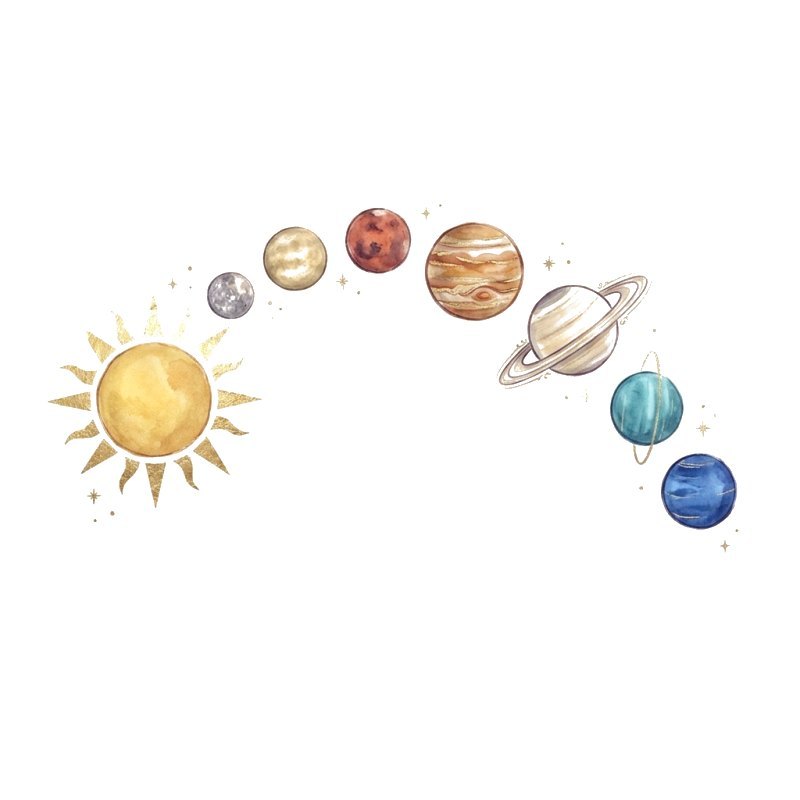
Every return takes on the character of its planet. Your solar return lands around your birthday and works as a yearly check-in on your sense of direction and identity: who you are becoming, and what you want the coming year to be about. Your Jupiter return, near ages 12, 24, 36, 48 and 60, highlights growth, belief and opportunity, often bringing a harvest of whatever you have been cultivating, whether that is a skill, a business or a new outlook. Your Saturn return, near ages 29 and 58, is the best known. It asks what you have built, what you are ready to commit to as an adult, and what you are ready to let go.
A return does not wipe the slate clean. You come back to a familiar starting point carrying everything you have learned since the last one. Astrologers cast a chart for the exact moment of the return and read it as a map of the cycle ahead. A solar return chart previews your year. A Jupiter return chart sketches the next twelve years of growth and belief. A Saturn return chart lays out the next twenty-nine years or so, which for the first return means roughly your late twenties into your late fifties.
Returns give you a way to read your life in chapters instead of one long blur. The same planet comes home at 29 and at 58, but you meet it as a different person each time. This section covers the three returns people ask about most: Saturn, Jupiter and the Sun.
The planets in your birth chart describe the different parts of you, the signs describe their style, and the houses show the areas of life where they play out. Returns add a sense of time. They mark the points where each planet comes full circle and starts its work in your life again. Alongside transits and progressions, they help you answer two practical questions: what is happening now, and what comes next. Read the individual return pages to see how each cycle shapes a stretch of your life, then look at the sign and house your returning planet sits in to see where its themes will show up most clearly.