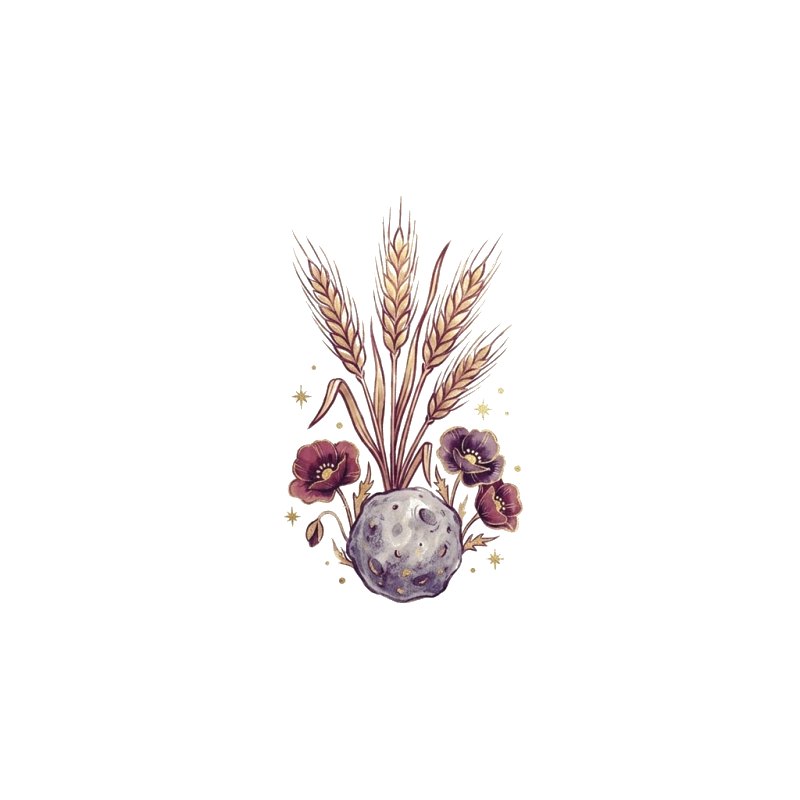
The essence
In astronomy, Ceres is the largest object in the asteroid belt between Mars and Jupiter, nearly 600 miles across. Giuseppe Piazzi spotted it from Palermo on January 1, 1801. It was the first asteroid ever found, which is why it carries the number 1. In 2006 astronomers reclassified it as a dwarf planet: a small body that refused to be minor.
Piazzi named it for the Roman goddess of grain and harvest, known to the Greeks as Demeter. When her daughter Persephone was taken to the underworld, Ceres stopped tending the earth, and nothing grew. The gods struck a bargain. Because Persephone had eaten pomegranate seeds below, she would spend part of each year there and part above. Her mother's grief and joy became winter and spring.
In your chart, Ceres shows where and how you nourish, both yourself and others. She governs food, the body's rhythms and the small repeated acts that make up devotion. This is mothering without sentiment. Her signature is the cycle of sowing, harvest, fallow and return, and she knows that real care sometimes means letting go.