The essence
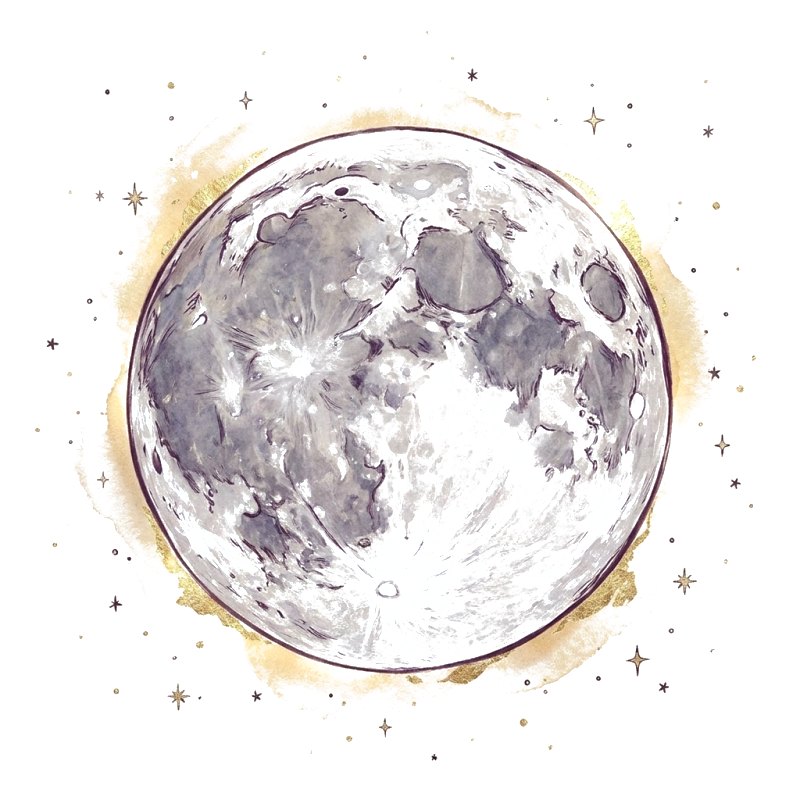
Astronomically, a Full Moon happens when the Moon is 180 degrees from the Sun, an exact opposition. The side facing us is fully lit by sunlight. It arrives roughly every 29.5 days, about halfway through the cycle that starts at the New Moon. It is also the only time a lunar eclipse can occur, when the Earth's shadow falls across the Moon.
People have marked it for as long as they have kept calendars. Farmers named each one. The Harvest Moon, nearest the autumn equinox, rose early enough to give extra hours of light for bringing in crops. Many festivals, from Passover to the Mid-Autumn Festival, are still timed by the Full Moon.
Symbolically, it is the moment of revelation. The Full Moon does not start things. It shows you what has been growing, for better or worse. The Greek krisis meant a decision or turning point: the hour a fever breaks, or the day the fruit is ready to pick. That older, steadier sense of crisis is what this phase carries.